Every house has a corner where no one speaks. It could be the side of the shed, the back of the garage, or under the house. Over the years, it becomes swamped with items that were too good to throw out and too broken to use. The bike frame is bent, the hot water system is broken, old taps are scattered, and the cable is knotted. For years, most householders ignore that pile and say they’ll get to it someday.
The question is easy, yet it keeps people stuck. Should it be retained or should it be scrapped? The only way to answer it correctly is to set up a skeptical homeowner opposite a buyer at H&Z Scrap Metal and ask away the questions, even the weird ones. This is the conversation that ensued.
Round One: “Why Should I Bother?”
Homeowner: I’ll be honest, I’m skeptical. I suppose that scrap yards only take big industrial loads, and I have a few boxes of rubbish in my shed. Will it be worth my time?
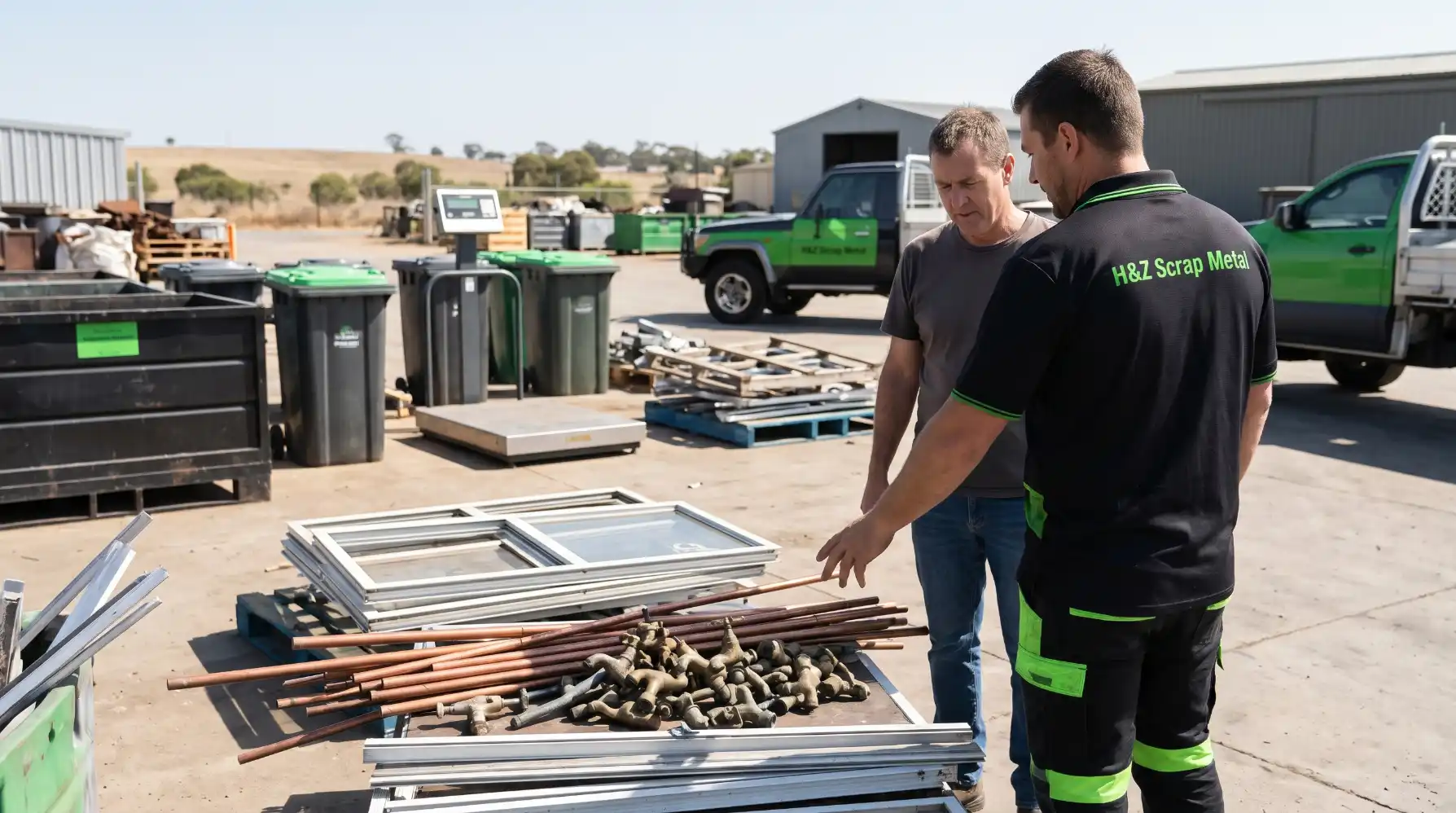
H&Z Buyer: That’s the most frequent concern that we get; I know that. Most customers who come to us aren’t industrial customers. They’re landlords, tradies, and homeowners who have been amassing it for years. Metal is valuable because it can be melted down and used to create new products. A small pile won’t be the end of the world; it will cost you a nice meal, and it’ll free up space that’s been taking up a lot of your space for years.
Homeowner: It’s not only about the money.
H&Z Buyer: Not necessarily. Some are in for the money; others want the space back. Others wish to learn that, as well as being buried, their old metal is also being recycled. It’s sometimes a little bit of all three.
Round Two: “Show Me What Counts as Scrap”
Homeowner: Fine. What is considered ‘scrap’? I don’t want to embarrass myself with something you’ll laugh at.
H&Z Buyer: No one’s laughing. METAL - we’re interested! The largest divisions are the heavy, magnetic metals of steel and iron. Then there are the more valuable non-ferrous metals: copper, brass, aluminum, lead, and stainless steel. Copper is found in old pipes and electrical wiring, and brass in taps and fittings. Aluminum is found in window frames, ladders, outdoor furniture, and in old gutters. Steel is everywhere: old gates, shelving, tools, sheet metal, and bed frames.
Homeowner: What about items that aren’t completely metal, such as an old lawn mower or washing machine?
H&Z Buyer: They are very frequent. A combination of metals and other materials is typically in the appliance or machine. But they can still be recycled, though the cost is dependent on the contents and the amount of metal. Before you decide it’s useless, ask us!
Round Three: “How Do I Tell What I’ve Got?”
Homeowner: This is my dilemma. Half my stack looks to me—grey, dull, and heavy-looking. I would be lost without knowing what I have.
H&Z Buyer: Don’t be an expert - a few simple checks do most of the work. The first one is a magnet. With a fridge magnet, hold the piece. If it doesn’t come off easily, it is probably made of steel or iron. If it doesn’t stick, it is probably made of a non-ferrous metal, like aluminum, copper, or brass. Note, however: stainless steel is an exception; some is magnetic, some is not, so don’t assume the magnet is the final word on stainless steel.
Homeowner: And the ones that don’t attract magnets? How do I distinguish those apart?
H&Z Buyer: Weight and color assistance. Aluminum is light for its size and has a silvery look. Copper always has the unmistakable reddish-orange color, even after losing its luster. Brass will be heavy and yellowish. You can find the true color by scratching a small area of an old item with a screwdriver.
Homeowner: So I don’t have to be sure, if I could get a general concept.
H&Z Buyer: Exactly. Items brought will be checked. Sorting at home doesn’t have to be perfect; it’s just about putting things in separate piles instead of one big pile.
Round Four: “Why Does Sorting Matter?”
Homeowner: What’s the point of sorting? Metal is metal.
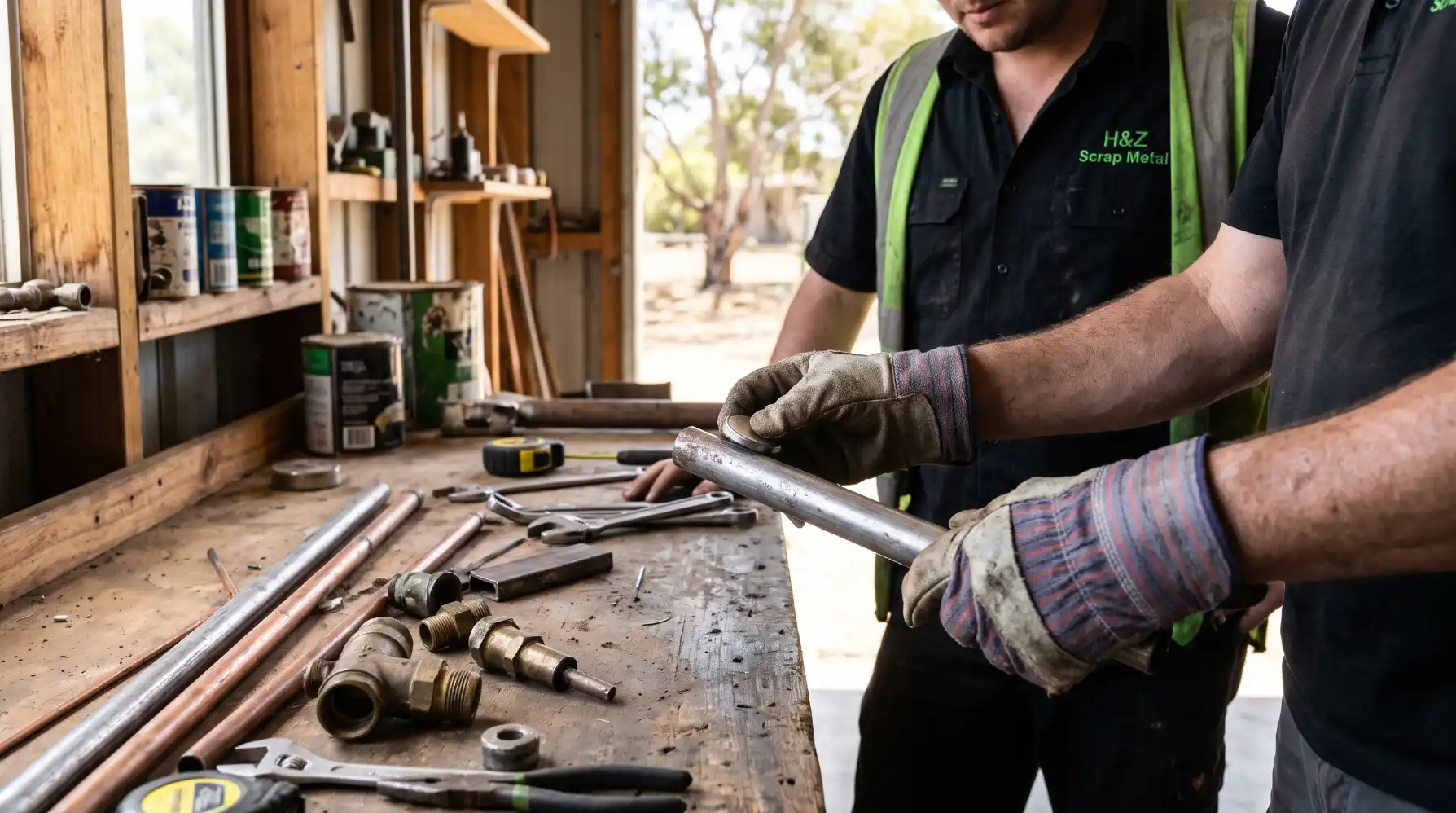
H&Z Buyer: They aren’t all processed together, and different metals have different values. When you put a handful of copper pipes in a stack of steel pipes, the copper may get lost in the steel. That’s a pity, as copper is normally more valuable than steel per kilo. Make it easier to check each metal in a separate box or bag; it gives you a clear view of what you have.
Homeowner: Is the metal dirty, does it matter?
H&Z Buyer: It’s darned fine, and there will be a little dirt and rust; no one says clean metal. The important point is that a non-metal element is attached. A copper pipe with plastic or insulation on it, or a steel frame with timber and foam on it, is less valuable than the copper pipe alone. If you can remove all the extras easily and safely, do so. If you can’t, bring it anyway and we’ll discuss your options.
Round Five: “What Should I Actually Keep?”
Homeowner: So, here’s the real question. When is it OK to save something, rather than scrap it? I don’t want to buy something I will need next month.
H&Z Buyer: I like that you’re asking because we never want anybody to throw away anything that can still be used. The 12-month rule is a simple rule to test. If you haven’t used it for a year and don’t have a definite plan to use it, it is likely clutter. If it’s working, you may not want to get rid of it; you could sell it on. Scrap is for things that are broken, obsolete, or beyond sensible repair.
Homeowner: Sentimental items? My old toolbox from my dad is half rusted, and I can’t bring myself to get rid of it.
H&Z Buyer: Then, keep it! Never let scrap value replace something important to you. When you’re not sure if a piece has a story, ask yourself if you would be sad if it didn’t. If it is, it remains.
Homeowner: This is not the salesman answer I was expecting.
H&Z Buyer: The sincere one. It’s a pile of metal, after all. A toolbox from dad is something different.
Round Six: “Are There Things I Shouldn’t Bring?”
Homeowner: What shouldn’t be in the pile? I have heard of how picky the scrap yards are.
H&Z Buyer: Yes, and most of the time it’s for safety. Some components of the old air conditioning or fridges, gas bottles, and fire extinguishers are pressurized and should only be handled by people who are familiar with their operation – please get in touch with us before handling these. This also applies to materials that contain stored fuel, oil, or chemicals. Avoid bringing in closed containers where you can’t tell what’s inside. So if you don’t know what to do with old material that may be dangerous, call us before handling it.
Homeowner: When in doubt, then ask.
H&Z Buyer: Yes, that’s correct. A phone call is all it takes to avoid an unnecessary trip and keep everyone safe. Guidelines may also differ from location to location, so be sure to confirm.
Round Seven: “What About Cars and Batteries?”
Homeowner: I also have an old car on the side of the house. Does that count?
H&Z Buyer: It can. An old car has a lot of metal, and it’s sometimes one of the larger scrap items a household might have. How it works depends on the car’s condition, its paperwork, and how it’s removed, so it’s best to talk to us about the specific vehicle. Some states and territories may require different documentation for vehicles, so we’ll let you know what’s required.
Homeowner: And car batteries? There’s a dead one sitting in the garage.
H&Z Buyer: Please don’t throw that in the bin. Car batteries contain materials that require proper recycling; store them upright in a dry, cool place. Please handle with care, wear gloves, and consult us on how to bring it in.
Round Eight: “How Do I Know the Price Is Fair?”
Homeowner: Alright, I don’t believe this bit. How can I be sure that I am being treated fairly and not ripped off?
H&Z Buyer: Okay, you know, it’s a good question. You can’t buy scrap metal at a fixed price. They follow the market and rely on the metal’s condition, amount, and type. So we can’t make any promises until we have viewed the material. You should get the metal weighed directly in front of you and an explanation of what is being weighed. You need to know what you’re being paid for each item, and if you don’t understand, ask questions.
Homeowner: But if I don’t?
H&Z Buyer: Then you’re free to take your metal home. No one should be forced to sell. It’s better to win a buyer’s trust than win a single sale.
Homeowner: I wouldn’t say it is uncommon to have that attitude.
H&Z Buyer: I know. That’s why we make a strong emphasis on being simple and straightforward.
Round Nine: “What If I Can’t Move It?”
Homeowner: Some of this stuff is heavy. There’s a cast-iron bath, an old water heater, and several steel shelves. I can’t just pack those in the boot!
H&Z Buyer: It’s not my problem. One of the most prevalent excuses for postponing it. If it’s too heavy or difficult to move, please inquire about Pickup. You can find out what’s feasible for your region and what we need to know in advance. The more information you can provide us with – for example, what items are in the object, how much of the object is there, how hard it is to reach the object, how easy it is to access the object, etc. – the smoother the process will run.
Homeowner: And don’t put your back at risk trying to be a hero.
H&Z Buyer: Never. Heavy metal can certainly lead to a trip to the physio. Lift with your legs, get help when you need it, and don’t take risks for a few dollars.
Round Ten: “Give Me a Rule to Live By”
Homeowner: Last question. When I forget the rest, what is the one rule I should keep in mind?
H&Z Buyer: 3 Questions in order. Do I still use it or love it? If yes, keep it. Second, would another person be able to use it as-is? If so, you can sell it or give it away. Thirdly, is it broken, out-of-date, or just taking up space? If so, that’s junk, and it’s likely worth more than you think, even if it’s only a bit more.
Homeowner: Do keep, pass on, or throw away.
H&Z Buyer: This is the complete system.
The Homeowner’s Verdict
Following the discussion, the homeowner acknowledged that the stack in the shed was very different. It was no longer a reminder of all the things that they deferred. Each was a small decision, and each was simple. The bent bike frame was ruined. The toolbox in Dad’s hands remained. Old taps were made of brass. The cast-iron bath needed a pickup, and the battery just needed special care.
This is often the way it is. Not everyone opposes a few men getting rid of their old pieces of metal. They don’t know where to begin, and they are afraid they will be taken advantage of. Most doubt is settled through calm discussion, a magnet, and a measure of honesty.
You don’t have to make the decision by yourself if you’re standing in front of your own pile and wondering whether to keep it or throw it away. Communicate with the H&Z Scrap Metal team. Share your interests, ask questions, and choose what works for you. You may be leaving with a lot more value than you realize in your shed, and if not, you’ll have a plan.